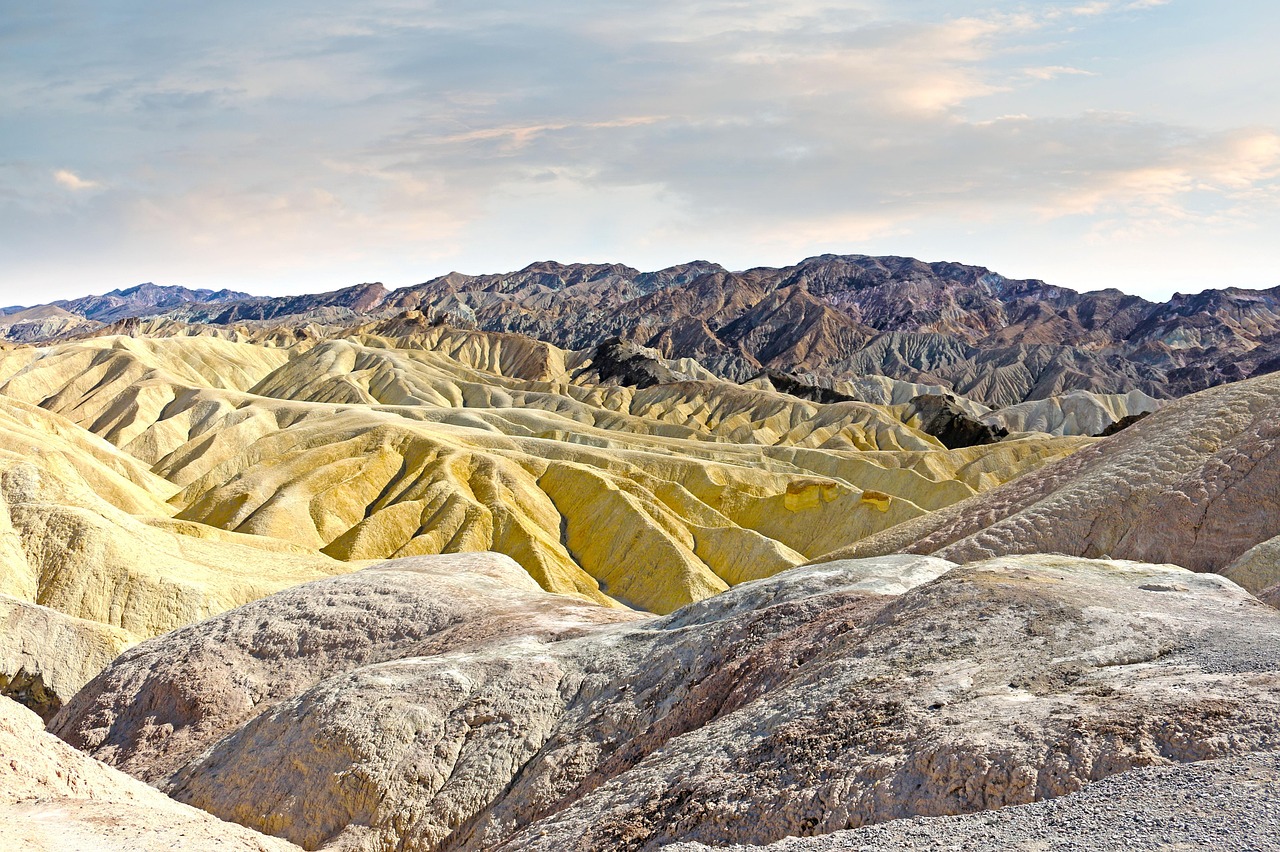
Death Valley, United States
Scores
Quick Facts
- Internet Speed:5 Mbps
- Affordability:expensive
- English:great
- Public Transit:poor
- Walkability:poor
Why It Fits
Death Valley National Park spans 3.4 million acres of stark desert terrain with dramatic canyons, colorful badlands, vast salt flats, and sand dunes. The park offers world-class hiking, stargazing, and photography opportunities, with iconic spots like Badwater Basin (282 feet below sea level), Zabriskie Point, and the artist's palette of colored rocks. The main town serving the valley is Furnace Creek, which offers basic accommodations and supplies, but Death Valley is primarily a day-trip or multi-day visit destination rather than a place to base yourself long-term. The best time to visit is October through April, when daytime temperatures range from 70–85°F and nighttime temperatures are mild (40–60°F). Winter months (December–February) bring the most visitors and are ideal for hiking and exploration. Summer is genuinely dangerous: June through August sees temperatures regularly exceeding 120°F, with records surpassing 130°F. Extreme heat, flash flood risk, and sparse facilities make summer visits inadvisable for most travelers. Death Valley suits photographers, adventure seekers, geology enthusiasts, and those craving extreme nature experiences. However, it is fundamentally unsuitable for digital nomads due to minimal infrastructure, no traditional coworking spaces, unreliable/absent internet connectivity in most areas, extreme weather half the year, and limited restaurants or entertainment. The nearest real towns with lodging and services (Beatty, Nevada or Lone Pine, California) are 1–2 hours away.
Popular Activities
See flights to Death Valley
Enter your nearest airport (IATA code) to show flight options.
Historical Weather
Average temperatures and rainfall