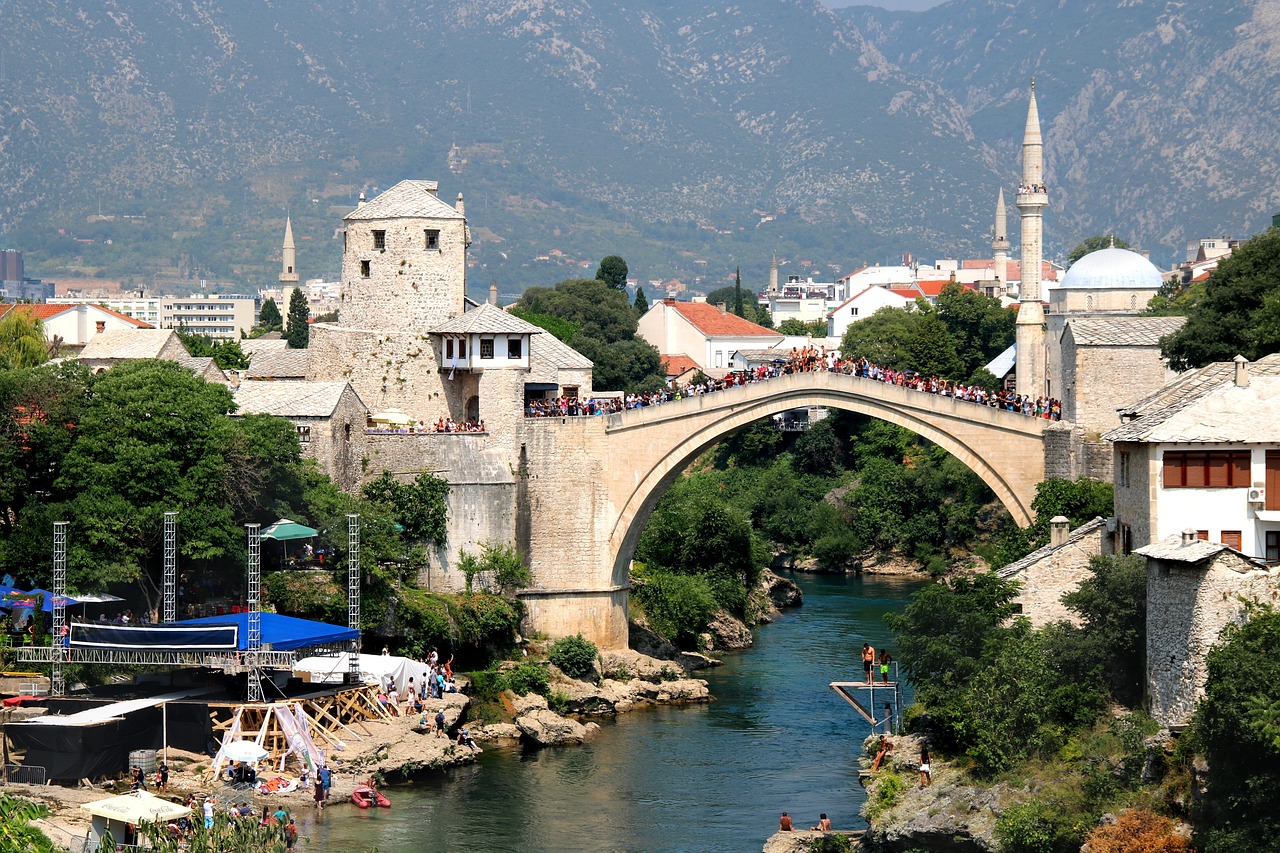
Mostar, Bosnia and Herzegovina
Scores
Quick Facts
- Internet Speed:32 Mbps
- Affordability:cheap
- English:reasonable
- Public Transit:reasonable
- Walkability:great
Why It Fits
Mostar straddles the Neretva River in southern Bosnia, where the famous 16th-century Stari Most bridge connects the Muslim-majority east bank with the Catholic west bank—a physical and cultural divide still evident in the city's layout. The old bazaar, narrow stone streets, and surrounding mountains create a striking backdrop, though visible war scars from the 1990s conflict remain part of the cityscape. The city has a raw, developing-world energy; reconstruction is ongoing, infrastructure is inconsistent, and tourist facilities are modest compared to Western European cities. The local food scene is solid (burek, cevapi, fresh produce from nearby farms), and the surrounding region offers hiking, rafting, and access to waterfalls. Mostar suits travelers interested in Balkan history, budget travel, and off-the-beaten-path culture rather than those seeking comfort, nightlife, or well-developed amenities. The best time to visit is late April through May and September through October, when temperatures are mild (15–25°C), rainfall is moderate, and tourism is manageable. July and August bring intense heat (30°C+) and peak crowds, making the city more congested and accommodation prices higher. Winter (November–March) is cool and wet, with occasional snow, making some mountain activities inaccessible; many smaller guesthouses close or reduce hours. The shoulder seasons offer the best balance of weather and authentic local atmosphere. Modern Mostar is affordable by European standards but not as cheap as Southeast Asia or deeper Eastern Europe. Accommodation ranges from €25–50/night for budget guesthouses to €60–100+ for mid-range hotels. Meals at local restaurants cost €3–7, and a monthly budget for a digital nomad would be roughly €1,200–1,600 including apartment rental, food, and transport. Internet is adequate (25–40 Mbps typical, often unstable) but not reliable enough for bandwidth-heavy work without a backup connection. English is spoken by younger people and those in tourism but remains limited among older residents and outside the main areas. The city rewards slow travel and immersion in regional Balkan culture; it is not ideal for those requiring cutting-edge infrastructure or a full menu of Western conveniences.
Popular Activities
See flights to Mostar
Enter your nearest airport (IATA code) to show flight options.
Historical Weather
Average temperatures and rainfall